The city of Mumbai was your proverbial point of origin. Could you revive key reminiscences of your Mumbai and Dubai stints?
I completed my elementary school years in Chembur, Mumbai. I have fond memories as a student of Swami Vivekananda High School. My father worked for TCS back in the 70’s and 80’s when Mumbai in the 70s and 80s was a city of vibrant contrasts, bustling with contagious energy. The city's iconic skyline was taking shape amid the cacophony of suburban trains. Every visit to my father’s office at the Air India building, Nariman Point left an progressively indelible imprint on my young mind, and I dreamt of working in the coveted vicinity someday in future. My dream came true when one of my first job had me stationed on the top floor of Maker Chambers III at Nariman Point.
My father subsequently pursued an international assignment, and we relocated to the UAE, Abu Dhabi and Dubai to be precise. My secondary school education (and high school) happened at the Indian High School in Dubai. This was one of my best formative experiences given the school’s equal emphasis on academics and sports. I am indebted to Mr. Agnel Crasto who taught public speaking and mind control back in the 80’s. Our dramatic teachers Mr. Suneel Hattangadi helped us develop a taste for dramatics. Thanks to the prolific Mr. Tapan Das, I excelled at swimming. One of the most memorable event was a 21 day trip to Europe in 1986 to commemorate our school’s silver jubilee. Visionary leader P. V. Narasimha Rao and the legendary boxer Mohammad Ali had graced the inaugural function.
While I exceled at Mathematics and Physics, I was also a basketball champion and well known as a “three pointer” specialist. Among other sports, I represented my school team for cricket “house” matches and was an extremely competent swimmer. We were trained to lap swim (50-100 laps)
My sporting encounters blossomed at a recreational club near our place. My father worked for the Department of Health and Medical Services in the electronic data processing department and we had a membership of the Rashid Hospital recreational club. My brother and I used to spend a good amount of time playing tennis, squash and table tennis at the club. During weekends, we invited our friends at the club and also participated in tournaments.
One of the aspects which my father emphasized early on was the focus on improving communication and vocabulary. During my teenage years, it was a goal to learn at least ten new words each week. The way to accomplish the task was to capture words from headlines of newspapers (Khaleej Times and Gulf News) and create a repository for reference. It was a pretty effective learning method.
My teen years in Dubai were awesome, made even more special by my role models included the ‘iceberg’ tennis star Bjorn Borg, and singer-musicians George Michael, Rick Astley, and Phil Collins.
Were you engineered for a career in engineering?
Yes, you could say that! Indian students who grew up in Dubai in the 80’s had only a few higher education options: move to India in pursuit of a degree (engineering, medicine, commerce) or move to the US/UK/Canada. I chose the former option and took up engineering education in India. The journey from Dubai to Amravati was a long one (figuratively speaking). It took me a while to adjust to the new environs, and I would escape to Dubai for taking rejuvenating breaks whenever I felt home sick. This was the first time I stayed away from my parents and there was some anxiety within me. One of the highlights of my Amravati stay was the use of the sports facility called HVPM (one of the only two sports institutions in India back in the 90’s). I was a fitness buff back then and made it a point to visit the gym and the pool.
Your education strides are interesting despite the tinge of predictability – BE, MBA, PM from Stanford, AI for leaders – what was the thought behind this progressive trajectory?
There was no specific thought process behind it. One thing led to the next, and I kept growing in my career. Although I completed my engineering degree, my real education began thereafter. In the first year, I had a brief stint at three companies (AFCONS, Omega CADD and Lipi Data Systems). As I have mentioned earlier, my childhood dream was to work at a company in Nariman Point, and my dreams came true when I worked for Omega CADD and Lipi Data Systems in the Nariman Point area. I spent only 3-4 months at each of the companies but the learning was tremendous. It was a eureka moment when one of my mentors suggested that I pursue an MBA degree given that I had excellent potential in marketing and management. It was a life changing moment for me and my career, which underlined the importance of mentors in life.
I took up admission at the Lala Lajpatrai Institute of Management, Mumbai. This was one of the best decisions as it is here that I found and honed my passion for marketing, information systems and technology. I excelled in a lot of subjects like marketing, consumer behavior, quantitative methods, operations research to name a few. Also, I was always a key team member who would diligently complete all the project work (from ideation to fruition). I would attribute much of this success to my stint in three companies. I also learned the value of networking and keeping in touch with people. I was never shy of asking for advice. One thing that kept me going was the “childlike curiosity” and a penchant for learning.
Upon completion of MBA, my first job was at an IT company which had operations in Singapore. My IT journey had just begun, and I could see the application of all the skills that I had learned during my MBA days. Subsequently, I joined another firm which provided me an opportunity to work on Lotus Notes (Groupware) and also impart training on project management (MS Project). I was very fortunate to learn the Microsoft suite of products and impart training to corporates. Once again, I was very fortunate to be trained and mentored by a group of bright IIM Calcutta grads who were the owners of the company.
On January 1st, 1999, I joined LTITL (Larsen and Toubro Information Technology Limited, now rechristened L & T Infotech). It was a privilege and honor to be closely working with the CEO Mr. Achyut Godbole. I worked for the products marketing division selling Veritas, Seagate and Lotus range of products. While at LTITL, I was also a visiting faculty at some of the leading MBA institutions in Mumbai. I taught subjects like IT applications in Business and Supply Chain Management at Somaiya Institute of Management Studies, Mumbai Education Trust (MMS)Subsequently, I moved to international marketing for the US North division with a short stint in St Louis during the year 2000. Later, I moved to the SAP SBU, and ever since I have been actively involved in SAP implementations.
One thing I learned very early was unflinching focus on the task at hand. I was sold on the transformative ideas that Al Ries and Jack Trout put forth in their book ‘Positioning’. I strove to get an inch wide and a mile deep to develop niche areas, and build a strong knowledge base around them.
Could you recall the high points of each corporate stint?
Maybe this snapshot will give a fair idea:
Omega CADD: I single handedly developed a marketing database for the Mumbai region with a contact matrix, relationship pyramid (back in 1995). My immediate boss was an ex-serviceman who taught me the importance of prompt and effective planning. I quickly adapted to the Mumbai spirit of relentless resilience, boundless ambition, and an unwavering commitment to progress.
Lipi Data Systems: I developed a marketing strategy for dealers and OEMs to sell multi-lingual software developed by CDAC. The Line Matrix printer demo at CMC Nextstep Groupware & I*Net Solutions was an exhilarating experience, thanks to the effective mentoring by IIM C co-owners, I learned about NLP early on (the art and science of building rapport.)
L&T Infotech: I helped establish solution sales for Lotus range of products, and played a pivotal role in sales pursuits for large deals, under the guidance of industry leaders like Mr. Achyut Godbole, Mr. VK Magapu and the esteemed L & T chairman and CEO Mr. AM Naik.
Deloitte: One of the finest moments at Deloitte was a two year global deployment assignment in Canada. The process of moving to a new country was made so seamless, thanks to the excellent support from both setups (US and Canada.) Partnered with another colleague to impart PMP training to groups of participants was also a special feat. We were fondly called the ‘PMP Mafia’ and enjoyed over 80% success rate in ensuring pass rates. Our efforts were duly felicitated at the firm.
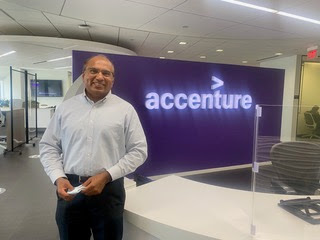
Accenture: Upon joining Accenture in 2017, I was put on a global project for a CPG client. During my stint, we were taking over work from another SI partner. A noteworthy accomplishment was implementing a trade promotion management solution for two business units (retail and food service) using two solutions SAP TPM and Vistex in three and a half months. We got onto the project mid-stream and helped establish a successful team and ensured a successful go-live. Subsequently, I ended up working on other projects at the client in Montreal (Canada), Milwaukee (US) and Melbourne (Australia.)
PwC: I played the role of a solution development lead for a Netherlands-based client. For the 10 months of my tenure on the project, I successfully delivered outcomes for the solution development phase. For the most part, I managed work from the US with periodic trips to Amsterdam.
Independent Consulting thru Digitaiz Ventures: For the last six months of 2023, I ventured into independent consulting and AI and established a key clientele independently. I had an opportunity to work for an esteemed client in the area of pricing processes. It was a wonderful opportunity to work on Vistex (SAP add on product), performance tools like Locust, and I developed good skills on tools like Splunk. Additionally, I helped few clients shape their AI strategy and use cases. We conducted a series of “Phase 0” workshops to educate clients on AI strategy and adoption of Gen AI.
Readers would love to catch your insights on diverse work cultures you have traversed.
Navigating through the work cultures of the US, India, Canada, Germany, Netherlands, Australia has offered me a panoramic view of the world’s workplace diversity. Each country presents a unique set of work ethics, communication styles, professional etiquette reflecting broader societal values and historical contexts
The US work culture is often characterized by a strong emphasis on individual achievement, innovation, and a ‘can do’ attitude. There is a significant focus on results and efficiency, with a relatively direct communication style. Networking plays a crucial role in career development, and the concept of work-life balance can sometimes take a backseat before professional ambitions. The work culture in Europe is focused on direct communication. Work-life balance is a critical part of the culture. This reflects a broader societal commitment to personal well-being and family time
I enjoyed working in Mumbai during my initial years and I owe a lot of my success to the spirit of Mumbai. I’ve learned a lot and honed my skills here. Mumbai is where the hustle of dawn-to-dusk endeavors meets an indomitable will to overcome challenges, embodying a city that never sleeps and never gives up, always pushing forward with determination and adaptability.
SAP is the mainstay of your expertise – can you do a quick recap of the voyage…
My initial experience had been in marketing and subsequently international marketing. During my tenure at L&T Infotech, I’d been part of a large pursuit focused on SAP. Along with the year-long pursuit, I started to build expertise on key SAP modules and this was my introduction to SAP. Since 2001, SAP embarked on a transformative journey, expanding its ERP solutions with the introduction of SAP NetWeaver, which laid the groundwork for integration and interoperability.
SAP then pivoted towards the cloud, acquiring companies like SuccessFactors and Concur, and enhancing its portfolio with SAP Cloud Platform to drive digital transformation. Emphasizing user experience and performance, SAP introduced S/4HANA, a next-generation ERP suite designed for both on-premise and cloud environments. Today, SAP continues to innovate, focusing on AI and machine learning integration, fostering the intelligent enterprise, and tailoring industry-specific solutions to maintain its leadership in the ERP space. I am happy to be part of a thriving movement.
You are actively involved in ESG initiatives… Most of my experience has been on large scale business and technology transformation programs. I’ve been focused on supply chain implementations. Over the years, sustainability has been one of the key areas of focus for clients. Additionally, there have been numerous regulatory and compliance considerations for clients to adopt and implement ESG initiatives. SAP has been deeply committed to ESG initiatives, aiming for carbon neutrality in its operations by 2023 through energy efficiency, renewable energy, and carbon offset projects. By integrating ESG principles into its business strategy and operations, SAP not only enhances its competitive edge but also contributes to societal well-being and environmental sustainability. Thanks to the SAP vision, I have a first-hand exposure to ESG initiatives.
What prompted the Déjà vu decision to join back Accenture?
Rejoining Accenture after exploring different professional avenues, including SAP implementations, a directorial position at PwC, and a stint as a subcontractor, was a conscious decision influenced by multiple factors including the ample professional growth opportunities, an unmistakably inclusive work culture, tech leadership and culture of innovation, and strong focus on digital transformation, cloud services, and sustainability solutions. Above all, my experience with SAP implementations and interest in staying at the forefront of technology innovations have drawn me back to Accenture.
What are your passion areas and pursuits?
My passion had been sports all throughout my life. Early on as a child, I had developed competency in tennis, squash, basketball and swimming. As a teenager in Dubai, I used to play in tennis tournaments and was also pretty competent in squash. Steve Jobs famously said, "You can't connect the dots looking forward; you can only connect them looking backward. So you have to trust that the dots will somehow connect in your future. I truly believe in this dictum. Between 2004 and 2010, I played in a competitive tennis league in California. During my two year global deployment stint in Canada, I used to play on the squash ladder at the Glenn Abbey Sports club in Oakville, Canada. Back then, squash was a religion for me. Not only did I strive to improve my game but it also helped me create a vibrant network of friends. So much so, that once we were ready to head back to the US after my two year stint, one of my friend even offered me a job to stay back in Canada. I continued my passion for squash while I was on a three year long project in Phoenix, Arizona area. I used to travel to Phoenix from Houston (every week for 3 years). I had established a routine of playing at the Lifetime Tempe on Tuesdays and Wednesdays. I was very focused and ensured that I played regularly; most of the times I took a raincheck for social events.
Tennis is another passion for me and my family. Along with squash, I have been a good tennis player. Up until 2020, I had been playing USTA League tennis in the Houston area. Initially, I played at the 4.5 level and later on dialed down to the 4.0 league. In 2019, I won the divisional league event. As a family, we also frequent a lot of tennis tournaments. Most notably, we’ve visited Wimbledon and are regular visitors to ATP Clay court championships in April each year. Additionally, I’ve also visited the Rod Laver arena in Melbourne during my visits there.
I’ve passed on my sports genes to my sons. My elder son played competitive tennis at the US National and International level. He’s played tennis at the Super Champ level in the US and was ranked in the top 15 when he was 12, top 25 when he was 14 and continued that trajectory later on. He’s played USTA Level 1 (National Clay Courts), Level 2 and Level 3 tournaments frequently across the US. Later on, he achieved an international ranking (ITF 1983) in 2018 when he played a tournament in Bahamas. Later he played ITF tournaments in Calgary, Irvine and Austin. My younger son is following in the footsteps of his brother. He’s currently a ninth grader and plays at the varsity level in school along with USTA tournaments.
Another family passion is travel. Over the past 20+ years, we’ve extensively traveled in the US, UK, Europe and Australia. We make it a point to travel somewhere fun at least once or twice a year (if possible). As a family, we also have a passion for scuba diving. We generally go to Florida (Key Largo, Key West) and Mexico.
After the pandemic, we’ve upped our focus on health and well-being. We had a personal trainer who used to train us at our home gym for two years. Initially he trained my son but in parallel my wife and I also embarked on a mission of personal training. I believe, personal training is the way to go as it helps you effectively with your goals. Our body is a temple and we need to take good care of it. Along with training diet and nutrition is very important. I’m a big fan of Dr. Pradip Jamnadas, Dr Berg, and Jason Fung among others and follow their advice religiously.
What’s next for you?
On the personal front, my mission is to stay fit and strong, and create my strongest version. I had suffered a back injury back in 2020, and ever since I’ve been striving to stave off injuries. This injury put a full stop to my all high-impact activities. As a result, my new focus is steady state cardio and strength training along with improving flexibility and range of motion. Another vision of mine is to travel as much as I can across the globe.
On the professional front, I would like to corroborate my skills in the area of AI. The first step in this direction was the AI for Leaders certification that I recently completed. I firmly believe that AI will be a game changer for all and it is very important for all of us to build skills early on and re-calibrate ourselves as we gravitate to the new. Additionally, my mission is to keep learning and adding new tools and technologies to my repertoire. I would also like to create some kind of social impact but haven’t yet given it a deeper thought. It will be my way of giving back to the society!
Any other thought which comes to mind on an impulse…
I would first like to talk about my mentor at length. It is said that when the student is ready, the Guru appears. That's exactly how I see my association with Dr Rajesh Deshpande I have fond memories of Dr. Deshpande teaching us "Consumer Behavior" at the lush sea-facing campus of Lala Lajpatrai Institute of Management at Haji Ali, Dr. Deshpande.
Today, Dr Deshpande is a leading faculty at Mumbai university on various marketing related subjects. Back in 1996, he worked at L&T in an executive position. Luckily for me, our residences were in close proximity, and I would often seek academic/professional advice from him. I benefitted immensely from Dr Deshpande's strategic thinking and his vast knowledge on various topics. It was under his guidance that I took up a role as a visiting faculty. It helped me build my presentation skills and also depth on subjects like supply chain management and IT applications, which I took up as a career later. Dr. Deshpande is is an extremely well read person with an in-depth knowledge of diverse knowledge streams. Thanks to his recommendations, I read gems like "The Art of War by Sun Tzu", "Thinking Fast and Thinking Slow" by Daniel Kahneman, and all books by Al Ries and Jack Trout. Over the years, we've always kept in touch and periodically meet when I visit Mumbai.
Last but not the least, a few words on fitness and well being. As we age, it is very important to maintain flexibility and range of motion; it is imperative that we take care of our physical and emotional selves. During the pandemic, I started the practice of meditation, and it was a game changer. One tip I give to everyone in my network is that all of us should strive to have a minimum of 150 minutes of intense workout every week. This should be non-negotiable.
With advancing age, we should strive to double our mobility and halve our cravings!